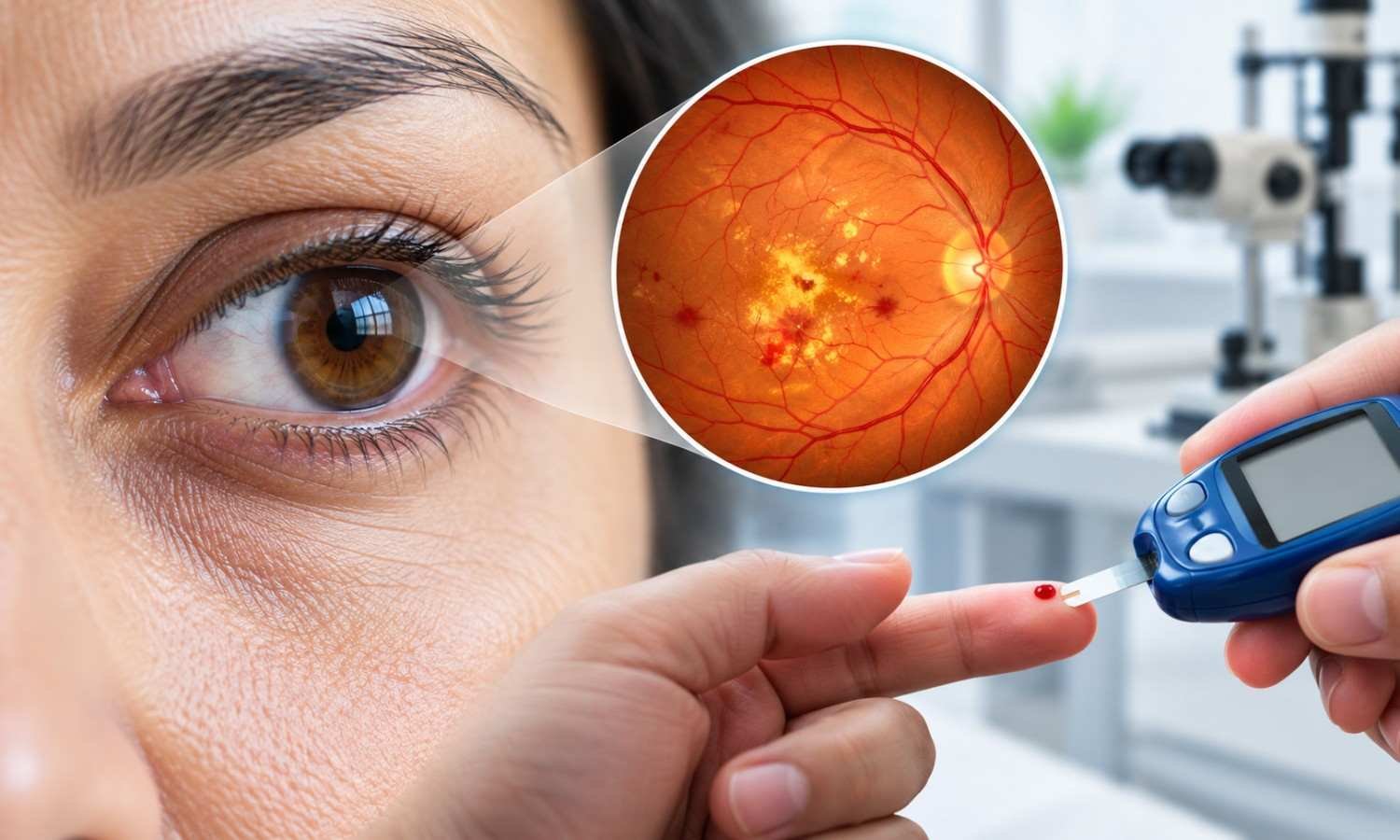
Diabetic Retinopathy in Upper Assam: How Diabetes Can Damage Your Eyes Without Warning
In short: Diabetic retinopathy is damage to
the tiny blood vessels of the retina caused by long-term high blood sugar. It
often causes no symptoms in the early stages, so vision can seem normal while
damage develops. Regular dilated retinal examinations can detect it early, when
it is easier to manage.
Most people
think of diabetes as a condition of blood sugar. It is also a condition of
blood vessels, and the eye has some of the finest blood vessels in the body.
Over the years, high blood sugar can slowly damage them. When this happens in
the retina, the result is called diabetic retinopathy.
The difficult
part is that diabetic retinopathy usually does not announce itself. You can
read the newspaper, watch television and drive, and feel that your eyes are
fine, while changes are already under way at the back of the eye. That is why
eye doctors ask people with diabetes to have their retina examined regularly,
even when they see well.
This is not a
reason to be afraid. Found early, diabetic retinopathy can be monitored and
managed, and many people keep useful vision for life. This guide explains what
the condition is, what to watch for, who is at risk, how it is checked and what
treatment can involve. If you live in Dibrugarh or anywhere in Upper Assam, it
also tells you where to start. You can read about our diabetic eye care service as well.
What is diabetic retinopathy?
The retina is a
thin layer of light-sensitive tissue at the back of the eye. It works like the
film in a camera: it picks up light and sends signals through the optic nerve
to the brain, which turns them into the pictures you see. The retina needs a
steady supply of blood from tiny vessels.
When blood
sugar stays high for long periods, these vessels can weaken, leak fluid or
blood, or become blocked. This damage is diabetic retinopathy. It affects
people with type 1 and type 2 diabetes.
It is helpful
to know that diabetes can affect the eyes in other ways too. Diabetes can bring
on cataract earlier and is linked with a higher risk of glaucoma, and changes
in blood sugar can cause short-term blurring by changing the shape of the lens.
These are different from diabetic retinopathy, which is damage to the retina
itself. Finding out which one you have needs an eye examination.
Early detection
matters because the retina does not regrow. Treatment is mostly about
protecting the vision you have, so the earlier a problem is found, the more
options there are.
Why can diabetic retinopathy develop without warning?
In its early
stage the damage is tiny. A few vessel walls bulge or leak in areas of the
retina that are not used for sharp, central vision. Your brain also fills in
small gaps, so you may not notice anything is missing.
Over time, the
damage can spread. Leaking fluid can reach the macula, which handles the fine
detail in the centre of your vision. Or the retina may lose its blood supply in
patches and start to grow fragile new vessels. By the time you notice a change
in sight, the disease may already be advanced.
Two points are
worth remembering:
•
Clear vision does not mean a healthy retina. A
dilated examination can see changes that you cannot.
•
Waiting for symptoms means waiting too long.
Screening is meant to find the problem before the symptoms start.
Symptoms of diabetic retinopathy you should know
Early diabetic
retinopathy often causes no symptoms at all. When symptoms do appear, they can
include:
•
Blurred or fluctuating vision, where sight seems clear
one day and hazy the next.
•
Floaters, which look like dark spots, cobwebs or
threads drifting across your vision.
•
Dark or empty patches in your field of vision.
•
Difficulty reading, recognising faces or seeing in dim
light.
•
Colours that look faded or washed out.
Get urgent help. Sudden loss of vision, a sudden
shower of new floaters, flashes of light, or a dark curtain or shadow moving
across your vision need an eye specialist’s assessment the same day. Do not
wait for these to settle on their own.
Blurred vision
does not always mean diabetic retinopathy. It can come from a change in blood
sugar, cataract or a need for new glasses. Whatever the cause, any change in
your vision deserves a proper examination.
Who is at risk of diabetic retinopathy?
Anyone with
diabetes can develop it. It is not limited to people whose sugar is poorly
controlled, though control makes a real difference. The main factors are:
|
Factor |
Why it matters |
|
Duration of diabetes |
The longer you have had diabetes,
the higher the chance of retinal changes. This applies to type 1 and type 2. |
|
Blood
glucose control |
Higher
and more fluctuating sugar levels over the years raise the risk. Good control
lowers it but does not remove it. |
|
High blood pressure |
Can add to the strain on the
retina’s small blood vessels. |
|
Abnormal
cholesterol or lipids |
Linked
with leakage in the retina and with macular swelling. |
|
Pregnancy with existing diabetes |
Retinopathy can progress faster
during pregnancy. An eye examination early in pregnancy, and follow-up as
advised, is recommended. |
|
Missed
or delayed screening |
Without
regular examinations, changes are found later, when treatment options may be
more limited. |
Having several
of these factors does not mean you will lose vision. It means regular eye
examinations matter even more for you.
When should people with diabetes get their eyes checked?
Guidance from
eye and diabetes bodies, including the American Academy of Ophthalmology,
suggests the following starting points:
•
Type 2 diabetes: a first retinal examination
around the time of diagnosis, as the disease may have been present for some
years before it was found.
•
Type 1 diabetes: a first examination a few years
after diagnosis (guidelines commonly say within three to five years), or
earlier if your doctor advises.
•
Pregnancy in a woman who already has diabetes:
an examination early in pregnancy, with follow-up as advised.
After the first
examination, how often you return depends on what the retina shows. People with
a healthy retina or very early changes may be seen every one to two years, or
yearly as many doctors prefer. If changes progress, check-ups become more
frequent, from every few months to within weeks for advanced disease. Your own
plan also depends on your age, how long you have had diabetes, how well it is
controlled and your doctor’s judgement.
So rather than
copying a schedule from the internet, ask your eye specialist for a personal
follow-up plan and keep every appointment, even when your sight feels fine.
Overdue for an eye check? Contact us to enquire about a
diabetic eye examination. Book an appointment or call +91 6901274500.
How is diabetic retinopathy diagnosed?
The tests are
usually quick and painless. Your specialist may use some or all of the
following:
•
Dilated retinal examination. Drops widen your
pupils so the doctor can look carefully at the retina and optic nerve. Your
near vision stays blurred and light feels bright for a few hours, so do not
drive yourself home afterwards. Bring a family member.
•
Optical coherence tomography (OCT). A scan that
takes cross-section pictures of the retina. It is especially useful for finding
swelling at the macula. OCT is listed on our retina care page.
•
Retinal photography and fluorescein angiography.
Where clinically needed, a specialist may advise retinal photographs, or an
angiogram in which a dye is injected into a vein to show leaking or blocked
vessels.
Not every
patient needs every test. Your eye specialist chooses based on your findings.
What are the stages of diabetic retinopathy?
Doctors group
diabetic retinopathy by severity. The three terms you are most likely to hear
are:
|
Term |
What it means |
What to expect |
|
Non-proliferative diabetic
retinopathy (NPDR) |
The earlier stage. Small blood
vessels in the retina weaken, leak fluid or blood, or close off. It ranges
from mild to severe. |
Often no symptoms. Mild cases are
usually monitored. More advanced cases need closer follow-up and sometimes
treatment. |
|
Proliferative
diabetic retinopathy (PDR) |
The
more advanced stage. As parts of the retina lose blood supply, fragile new
blood vessels grow. These can bleed into the eye or pull on the retina. |
May
cause floaters, sudden vision loss or retinal detachment. Needs prompt
specialist care. |
|
Diabetic macular oedema (DME) |
Fluid builds up in the macula, the
part of the retina used for reading, recognising faces and seeing detail. It
can occur at any stage. |
Often causes blurred or distorted
central vision. May need injections or laser. |
Severity varies
from person to person, and the two eyes can differ. Only a qualified eye
specialist can tell you which stage you are in and how it should be managed.
What are the treatment options for diabetic retinopathy?
Treatment
depends entirely on what the examination shows. Many people do not need
injections, laser or surgery. The usual options are:
|
Option |
What it involves |
Usually considered for |
|
Diabetes, blood pressure and lipid
control |
Forms the base of care for every
stage. Done with your physician or diabetologist. |
All stages |
|
Monitoring
and follow-up |
Regular
examinations and, where needed, imaging to watch for change. |
Early
disease without macular swelling |
|
Anti-VEGF injections |
Medicine placed into the eye to
reduce abnormal blood vessel growth and macular swelling. The eye is numbed
first. |
Diabetic macular oedema and some
cases of proliferative disease |
|
Laser
treatment |
Laser
applied to the retina to treat leaking or abnormal vessels and reduce the
risk of further complications. |
Selected
cases, as advised by the specialist |
|
Vitrectomy surgery |
An operation to remove blood or scar
tissue from inside the eye, or to repair a detached retina. |
Certain advanced complications |
Injections,
laser and surgery help to protect vision and reduce the risk of complications.
They cannot promise a cure or a guaranteed outcome, and they do not replace
good control of diabetes. Retina treatment at Drishti is described on our retina care page.
Can diabetic retinopathy be prevented?
You cannot
always prevent it, but you can lower the risk and slow its progress. This is
what helps most:
1.
Manage your diabetes as advised by your doctor,
including medicines, diet, activity and regular blood tests.
2.
Keep blood pressure and cholesterol in the range
your doctor sets for you.
3.
Have regular retinal examinations, even when
your vision is clear.
4.
Follow your treatment and follow-up plan and do
not stop treatment because you feel well.
5.
Get new visual symptoms checked promptly.
6.
Stop smoking, if you smoke.
Good control lowers the risk but does not
remove it entirely, which is why screening stays important however well you are
doing.
Diabetic eye care in Dibrugarh and Upper Assam
For people in
Dibrugarh, Tinsukia, Sivasagar, Dhemaji, Lakhimpur and the surrounding
districts, and for families travelling from Arunachal Pradesh and Nagaland, the
main hurdle is often not knowing a check-up is needed, or putting it off
because work, farming or travel gets in the way. A routine retinal examination
takes little time compared with the years of vision it helps to protect.
Drishti
Netralaya has served Upper Assam for over 36 years. Our retina team is led by
vitreo-retinal surgeons, listed on the our
doctors page. According to our retina page, routine dilated
examinations and diabetic retina screening are offered at our Dhemaji City
Center and Machkhowa Vision Center, while retinal injections, laser treatment
and surgery are carried out at the main hospital in Dibrugarh, near Amolapatty
Railway Gate.
Please confirm
current services and appointment times on our diabetic eye care page or contact page before
you travel.
Practical tips
for your visit: bring your previous eye records, a list of your medicines and
your latest blood sugar reports, and bring someone with you, because dilating
drops make driving unsafe for some hours.
Frequently asked questions
Can diabetic retinopathy occur without symptoms?
Yes. In the
early stages most people notice nothing, and vision can stay clear while the
retina is already changing. This is why a retinal examination is recommended
even when your eyesight feels normal.
Can diabetic retinopathy cause blindness?
It can cause
serious vision loss if it is not found and managed in time, and it is one of
the leading causes of vision loss in working-age adults with diabetes. The
encouraging part is that regular screening and timely treatment can lower the
chance of severe vision loss. Your specialist can tell you what applies to your
eyes.
How often should people with diabetes get their eyes checked?
There is no
single interval for everyone. Guidelines suggest that people with type 2
diabetes have a first retinal examination around the time of diagnosis, while
people with type 1 diabetes usually begin a few years after diagnosis. After
that, the gap depends on what the retina shows, your diabetes control,
pregnancy and your doctor’s advice. Ask your eye specialist for a personal plan
and keep to it.
Can diabetic retinopathy be reversed?
Existing
retinal damage usually cannot be reversed. What treatment and good diabetes
control can often do is slow the progression and protect the vision you still
have. Some swelling at the macula may improve with treatment, but this varies
from person to person.
Does everyone with diabetes develop diabetic retinopathy?
No. Not
everyone with diabetes develops it, and the risk is lower with good control of
blood sugar, blood pressure and cholesterol. The risk rises with the number of
years you have lived with diabetes, so everyone with diabetes needs regular
examinations, whatever their current sugar readings.
Can diabetic retinopathy be treated?
Yes, it can be
managed. Treatment depends on the findings. Early disease may only need careful
monitoring and better control of diabetes, blood pressure and cholesterol. More
advanced disease may need injections into the eye, laser treatment or, in some cases,
surgery. Your eye specialist decides what is right for you.
What is the difference between diabetic retinopathy and diabetic macular oedema?
Diabetic
retinopathy is damage to the blood vessels across the retina. Diabetic macular
oedema (DME) is swelling in the macula, the small central part of the retina
responsible for sharp vision. DME can occur at any stage of retinopathy and is
a common reason for blurred central vision.
When should someone with diabetes seek urgent eye care?
Seek care on
the same day if you have a sudden loss or drop in vision, a sudden shower of
new floaters, flashes of light, or a dark curtain or shadow across your vision.
Do not wait for your next scheduled check-up.
Can people with diabetes have an eye examination even if their vision is clear?
Yes, and they
should. Clear vision does not mean a healthy retina. A dilated examination can
find changes that you cannot feel or see yourself, long before your eyesight is
affected.
Does blurred vision in a person with diabetes always mean diabetic retinopathy?
No. Blurred
vision may also come from changes in blood sugar, which can temporarily change
the shape of the eye’s lens, or from cataract, glaucoma or a need for new
glasses. Only an eye examination can tell the cause, so do not assume or ignore
it.