Pediatric Eye Care in Dibrugarh
A young child rarely says "I can't see properly." More often, they just adjust — sitting closer to the TV, holding a book near their nose, avoiding drawing or reading. Parents usually don't notice anything is wrong until a teacher points it out, or until a routine check reveals a problem that's been there for months.
This is one of the main reasons pediatric eye care in Dibrugarh needs its own approach, separate from adult eye care. Children can't always describe what they're seeing, so the examination has to be built around observation, patience and age-appropriate testing. At Drishti Netralaya, children are seen for everything from a first vision screening to a specific concern like a drooping eyelid or a turning eye.
Why Children Need a Different Kind of Eye Care
An adult eye exam relies heavily on the patient answering questions — which line is clearer, does this blur, does your vision change. A three-year-old can't do most of that. Pediatric eye care in Dibrugarh has to work around a shorter attention span, limited vocabulary, and sometimes outright reluctance to sit still for an exam.
The Biological Factor
There's also a biological reason it matters. A child's visual system is still developing well into the early school years. The brain and the eyes are, in a sense, learning to work together — and if one eye isn't sending a clear image during that window, the brain can start to favour the other eye. This is part of why certain childhood eye problems are assessed and managed differently than the same condition would be in an adult.
Schedule Visual Screening
Ensure your child's visual development is on the right track at Drishti Netralaya.
Book AppointmentSigns Your Child May Need an Eye Check-Up
Most of these signs don't point to anything serious on their own. But they're worth getting checked rather than waiting out.
Struggling to see the blackboard or whiteboard at school
Sitting unusually close to the television
Holding books, tablets or phones very close to the face
Rubbing the eyes frequently, especially without obvious cause
Squinting or screwing up the eyes to focus
Closing or covering one eye to see better
Frequent headaches, especially after reading or studying
Losing interest or attention during reading or close-up tasks
Falling behind at school for reasons that aren't clearly explained
One eye appearing to drift or turn, occasionally or constantly
A drooping eyelid, or eyes that look unequal in size or position
Complaints of blurred vision, double vision, or difficulty recognising people or objects from a distance
Redness, watering, discomfort or pain in the eye
A recent eye injury, however minor it seemed at the time
A family history of squint, lazy eye, high refractive error, or childhood eye disease
If your child shows one or more of these, it may be a sign of an underlying vision problem and should be assessed — it doesn't automatically mean something is seriously wrong, but it's not something to guess about either.
Book a Pediatric Check-UpCommon Eye Problems in Children
Understanding the key visual challenges that affect childhood vision and academic development.
Refractive Errors — Myopia, Hypermetropia, Astigmatism
These are the most common vision problems seen in children. Myopia (nearsightedness) makes distant objects blurry — the board at school is often the first thing affected. Hypermetropia (farsightedness) can cause eye strain and headaches, particularly during close work like reading or homework. Astigmatism causes blurred or distorted vision at most distances. Left uncorrected, any of these can genuinely affect how a child performs at school, simply because they're not seeing clearly enough to keep up — not because of any learning difficulty.
Lazy Eye (Amblyopia)
Amblyopia develops when one eye doesn't develop normal vision during childhood, often because the brain starts to rely more on the stronger eye. It can happen because of an uncorrected refractive difference between the two eyes, a squint, or occasionally a childhood cataract. It doesn't usually cause obvious symptoms early on, which is exactly why it's often picked up during a routine check rather than because the child complained of anything.
Squint (Strabismus)
A squint is when the two eyes don't align in the same direction — one eye may turn in, out, up or down. It can be constant or come and go, especially with tiredness. Squint in children needs a proper assessment because, apart from the cosmetic aspect, an untreated squint can also contribute to lazy eye. This is an area we manage in more detail on our dedicated squint and paediatric eye care page, which covers assessment, prism glasses, vision therapy and strabismus surgery where indicated.
Childhood Cataract and Glaucoma
A childhood cataract is a clouding of the lens inside the eye, and it can be present from birth (congenital) or develop later. Because it can interfere directly with visual development, it's evaluated without delay once noticed — sometimes the first sign is a white or grey reflection in the pupil, visible in photographs or in certain lighting. Childhood glaucoma involves raised pressure inside the eye and is far less common, but it also needs prompt, careful evaluation. Both are managed based on the individual child's findings.
Ptosis (Drooping Eyelid)
Ptosis is when the upper eyelid sits lower than it should, sometimes covering part of the pupil. In some children it's present from birth; in others it develops later. Beyond how it looks, a significant droop can partially block vision in that eye and needs to be evaluated for its effect on visual development, not just its appearance.
Eye Injuries in Children
Children get hit in or around the eye more often than most parents expect — during play, sport, or a fall. Even an injury that looks minor on the surface can affect deeper structures of the eye. Any significant eye injury in a child should be looked at by an eye specialist promptly rather than waiting to see if it settles on its own.
A Closer Look at Childhood Myopia
Myopia in children has become a bigger part of everyday pediatric eye care than it once was, and it's not always obvious to parents. A child with early myopia may not complain — they simply can't see the board clearly, so they lean forward, squint, or stop trying to read what's written from a distance. Some children get used to blurry distance vision without realising it's unusual, because they've never known anything different.
Watch for squinting to see distant objects, sitting close to the television, or holding devices unusually close. None of these confirm myopia on their own, but they're reasons to get an eye check done rather than assume it's a phase. Myopia in children can also progress over time, which is part of why regular eye examinations — not just a one-off check — matter through the school years.
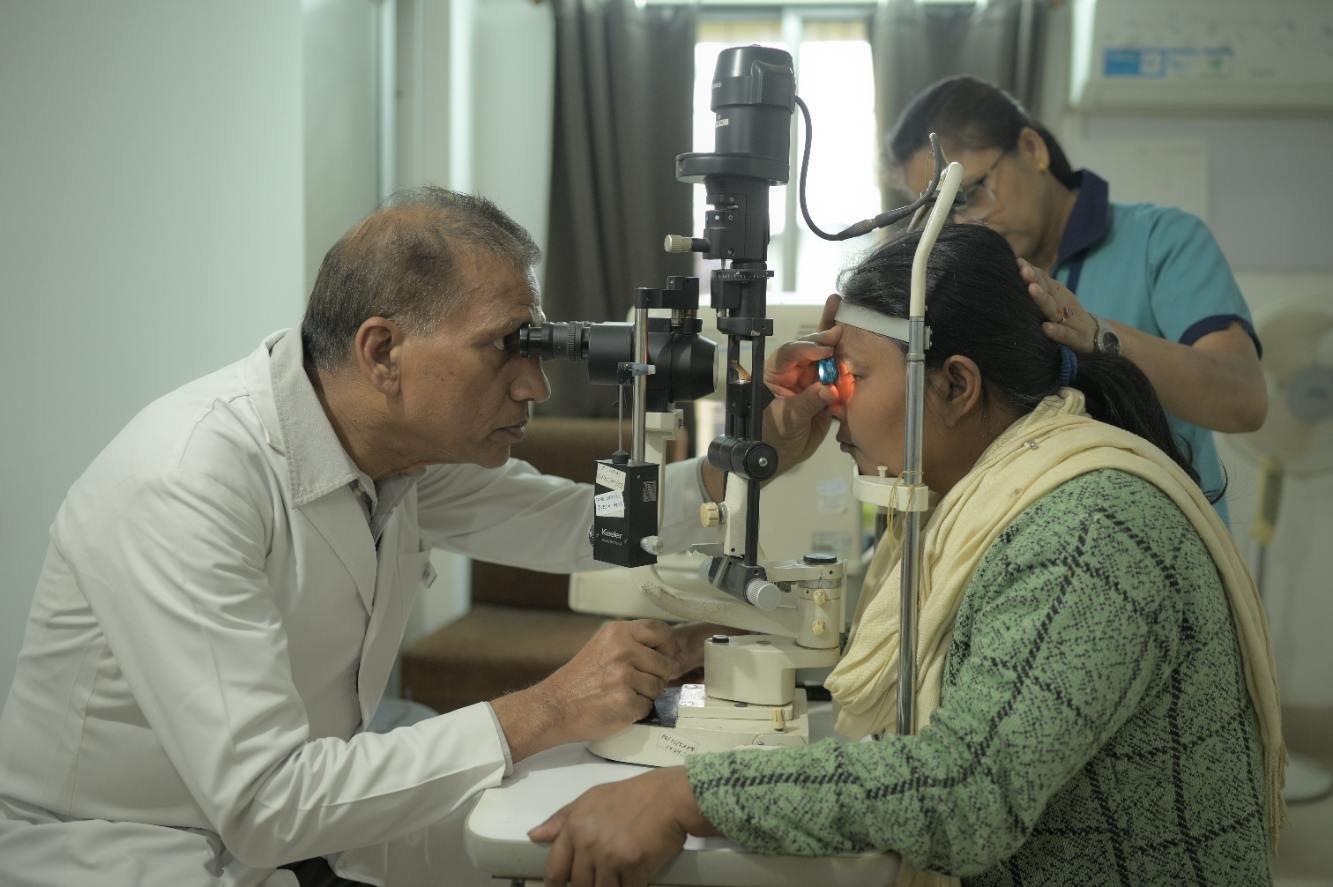
Child's Eye Examination
The exact steps vary depending on the child's age and the reason for the visit, but every examination is tailored to ensure a comfortable and comprehensive assessment.
What Happens During a Child's Eye Examination
INITIAL CONSULTATION & HISTORY
Parent Conversation: Discussion regarding the child's specific symptoms, vision history, and any current concerns.
Health Profile: Reviewing the child's general health background and family eye history where relevant.
VISION & ALIGNMENT ASSESSMENT
Vision Assessment: Evaluated using age-appropriate, child-friendly visual charts and testing methods.
Eye Movement: Checking how the eyes move, tracking objects, and align with each other properly.
REFRACTION & EYE STRUCTURE
Refraction Test: Performed if needed to check for refractive errors and determine a glasses prescription.
Eye Health Check: Comprehensive examination of both the front and back (retina/optic nerve) of the eye, along with additional tests if indicated.
EXPLANATION & RECOMMENDATION
Clear Feedback: A plain-language explanation detailing all findings from the examination.
Personalized Plan: Clear recommendations tailored to the case — including glasses, medical treatment, active monitoring, or scheduled follow-ups.
Tailored Pediatric Care: Not every child needs every step at every visit. A first-time screening for a five-year-old looks different from a follow-up visit for a child being treated for a squint. Schedule a consultation at Drishti Netralaya, Dibrugarh.
Treatment and Care for Children's Eye Problems
Treatment depends on the child's age, the specific condition, how severe it is, and whether one or both eyes are involved. There's no single approach that fits every case. Depending on what's found, care may involve:
- Prescription glasses to correct refractive errors
- Amblyopia (lazy eye) therapy, where appropriate for the child's age and findings
- Vision therapy in selected cases
- Prism glasses for certain types of squint or double vision
- Regular monitoring, where a problem is mild or still developing
- Medical treatment for infections or inflammation
- Surgery, where clinically indicated — for conditions such as significant squint or childhood cataract
Why Early Eye Assessment Matters
A child's visual system develops over the first several years of life. Some problems — like amblyopia — respond better to treatment when they're identified while that development is still underway, rather than after it. This doesn't mean every delay leads to permanent harm; many childhood vision problems are picked up and corrected well within a normal timeline. It simply means that regular checks and prompt attention to warning signs give a child's eyes the best chance of developing normally, rather than leaving a problem to be found later, by chance, once it's had longer to affect vision.
Pediatric Eye Care at Drishti Netralaya, Dibrugarh
Drishti Netralaya has been providing eye care in Dibrugarh since 1988 and is NABH-accredited. Pediatric eye care here is led by Dr. Suvarna Balankhe, a squint and paediatric ophthalmology specialist who trained at the Wilmer Eye Institute, Johns Hopkins Hospital, USA, in paediatric ophthalmology and strabismus. Children are examined by a team familiar with the specific challenges of assessing younger patients — shorter attention spans, limited ability to describe symptoms, and the need for a calmer, more patient approach than an adult consultation.
The hospital sees children from Dibrugarh and across Upper Assam, including families travelling from Dhemaji, Machkhowa, and neighbouring Arunachal Pradesh and Nagaland. For conditions involving eye alignment — squint, lazy eye, or a child needing vision therapy or strabismus surgery — the squint and paediatric eye care service covers assessment and treatment in more depth.
Book a Pediatric Eye Consultation in Dibrugarh
If your child has shown any of the signs mentioned above, or simply hasn't had an eye check-up recently, it's worth getting it looked at. You can visit Drishti Netralaya at Amolapatty Rly Gate, Dibrugarh, Assam – 786001, or call +91 6901274500 to book a consultation
Frequently Asked Questions
It's eye care focused specifically on children — examining and treating vision and eye health while a child's visual system is still developing, using methods suited to their age.
There's no single fixed age. A first check is often useful around the pre-school years, but a child of any age should be seen sooner if they show symptoms like squinting, headaches, or one eye turning.
Watch for behaviours like sitting close to the TV, holding books near the face, rubbing eyes, headaches while reading, or falling behind at school. These can be signs, though a proper eye check is the only way to know for sure.
Yes. Myopia in children is common and can develop or change during the school years, which is why periodic eye examinations matter, not just a one-time check.
Amblyopia often has no obvious outward signs, especially early on. It's frequently found during a routine eye check rather than because the child noticed anything themselves.
Squint can be related to refractive errors, muscle control around the eye, or in some cases other underlying conditions. Each case is assessed individually to understand the likely cause.
Some children with squint have normal vision in each eye individually; others develop reduced vision in the turning eye if it isn't treated. This is why assessment matters even if the child doesn't complain of blurred vision.
A general check-up is reasonable even without obvious symptoms, since some problems — like amblyopia — don't always show visible signs early on.
Yes, indirectly. A child who can't see the board clearly or gets headaches while reading may struggle to keep up, and it's sometimes mistaken for a learning or attention issue when it's actually a vision problem.
It usually includes a discussion of symptoms and history, a vision assessment, checking eye alignment and movement, refraction if needed, and an eye examination — with further tests only if required.
Drishti Netralaya, located at Amolapatty Rly Gate, Dibrugarh, provides pediatric eye care for children from Dibrugarh and across Upper Assam, including Dhemaji, Machkhowa, Arunachal Pradesh and Nagaland.
If there's a sudden change in vision, an eye injury, a persistent eye turn, a drooping eyelid, or pain and redness that doesn't settle quickly, it's best to get it assessed rather than wait.
Book Consultation
Quick & Easy Appointment Request