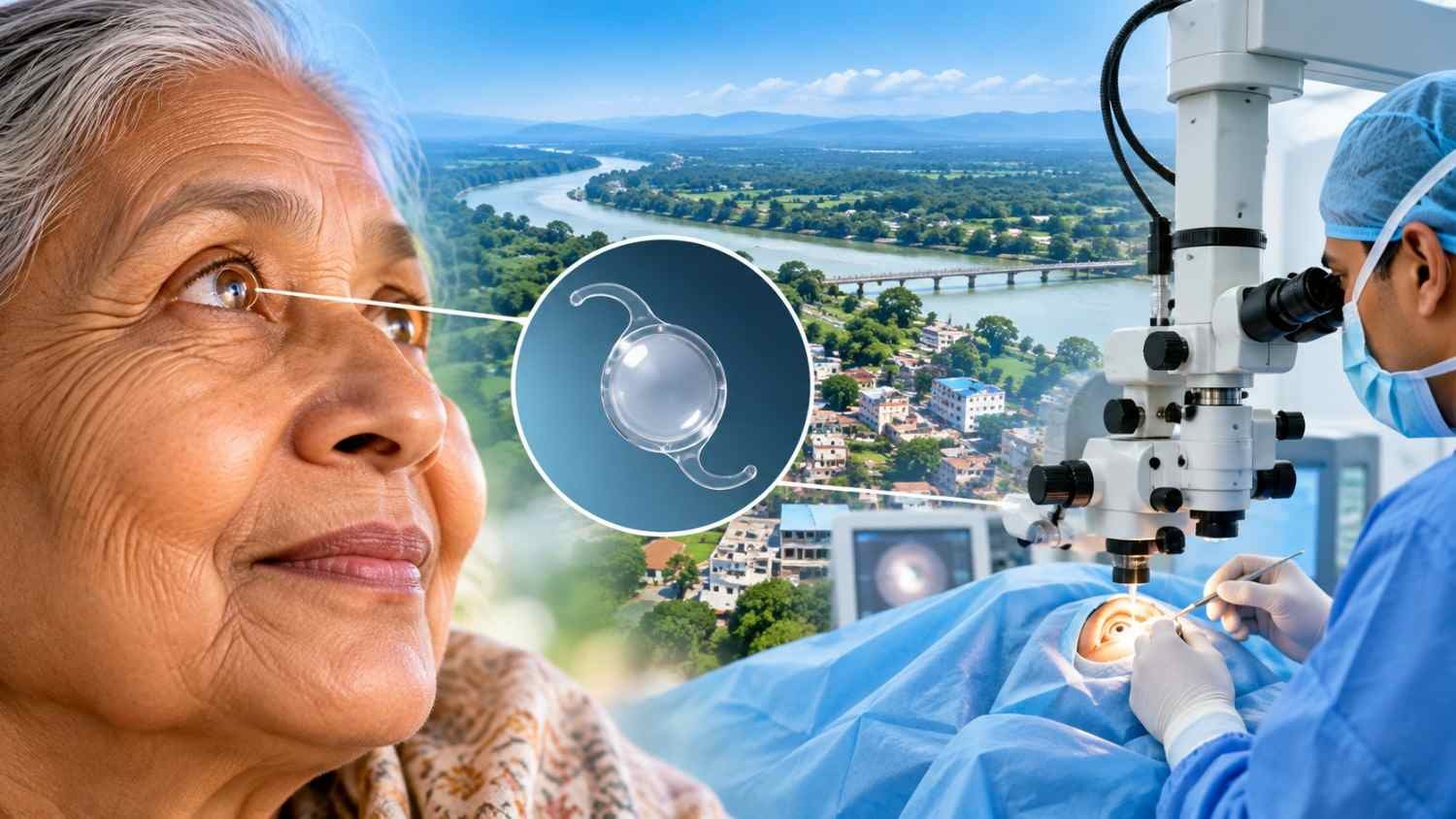
Cataract Treatment in Upper Assam: What Patients From Dhemaji, Lakhimpur & North Lakhimpur Should Know
Vision that slowly turns hazy is
easy to ignore. Many people put it down to age, tired eyes or an outdated pair
of glasses, and carry on for months or even years. For a large number of them,
the real cause turns out to be a cataract — one of the most common and most
treatable reasons for reduced vision.
For families across Upper Assam,
the question is often practical rather than medical: where should the
evaluation be done, what will surgery involve, and how do we manage follow-up
when home is a long drive away? This guide is written for patients in Dhemaji,
Lakhimpur and North Lakhimpur, and anyone else in the region, who want to
understand cataract treatment clearly before making decisions.
What Is a Cataract?
A cataract is a clouding of the
eye's natural lens, which sits just behind the pupil. It causes blurred, hazy
or dim vision that glasses can no longer fully correct.
The lens normally lets light
pass through clearly and focuses it onto the retina. Over time, proteins in the
lens can change and clump together, making it cloudy — a bit like looking
through a frosted window. Ageing is the most common cause, but diabetes, eye
injury, long-term steroid use and some other eye conditions can bring cataracts
on earlier. Cataracts are not caused by overusing your eyes, and they do not
spread from one eye to the other, although both eyes are often affected at
different speeds.
Symptoms Worth Paying Attention To
Cataracts usually develop
slowly, so the changes can be easy to miss. Common signs include:
- Cloudy, blurred or misty vision
- Glare or halos around lights, especially while driving
at night
- Colours looking faded or yellowish
- Needing brighter light to read
- Frequent changes in spectacle power
- Double vision in a single eye
These
symptoms can also point to other eye conditions, including diabetic eye disease
and glaucoma, so they should not be self-diagnosed. A proper eye examination is
the only way to know what is going on.
When Is Cataract Surgery Needed?
Surgery is usually considered
when a cataract begins to interfere with daily life — reading, working,
cooking, recognising faces or driving — rather than simply because a cataract
has been detected.
In the early stages, stronger
glasses and better lighting may be enough. There is no eye drop or medicine
proven to reverse a cataract, so once vision is significantly affected,
replacing the clouded lens is the established treatment. In some situations,
timing matters more: for example, when a very advanced cataract makes it hard
to examine the back of the eye, or when a cataract is affecting other eye
conditions. Your ophthalmologist will advise on timing based on your
examination rather than a fixed rule.
Understanding Cataract Treatment Options
Cataract surgery involves
removing the clouded natural lens and replacing it with a clear artificial
lens, called an intraocular lens or IOL. Two decisions matter most: the
surgical technique and the type of lens.
Surgical Technique: Phacoemulsification and Small-Incision Surgery
Phacoemulsification, commonly
called phaco, uses ultrasound energy through a very small incision to break up
and remove the cloudy lens. Manual small-incision cataract surgery (SICS) is
another established technique that removes the lens through a slightly larger,
self-sealing incision, and is often considered for denser cataracts. Which
approach is more suitable depends on the type and hardness of the cataract and
the health of your eye — this is a decision for your surgeon, not something to
choose in advance.
Choosing an Intraocular Lens (IOL)
A standard monofocal IOL is
designed to give clear vision at one distance, usually far, with glasses still
needed for reading. Premium IOLs are designed to reduce dependence on glasses
at more than one distance. Suitability depends on your eye measurements, the
health of your retina and cornea, your daily activities and your expectations.
It is worth asking your surgeon which options are appropriate for your eyes,
and what each is likely — and not likely — to do.
Why Patients From Dhemaji, Lakhimpur & North Lakhimpur Consider Dibrugarh
Upper Assam is well connected by
road, and Dibrugarh has long been a regional hub for specialised healthcare.
Patients from Lakhimpur and North Lakhimpur, in particular, often travel there
when they want a full specialist evaluation, diagnostic tests, and surgery
planned in the same place.
A cataract assessment is rarely
just one test. It can involve measuring the eye to select the right lens,
examining the retina, and checking for other conditions such as glaucoma or
diabetic changes that could affect the outcome. Having this coordinated under
one roof, with the surgeon who will operate involved in the planning, is a
practical advantage when travel is involved. That said, cataract care is
available in many places, and many patients are well looked after closer to
home — the goal is to choose a setting where you feel confident in the
evaluation and the follow-up arrangements.
Cataract Care at Drishti Netralaya
Drishti Netralaya is an eye
hospital based in Dibrugarh with NABH accreditation and cataract surgery among
its core services. The hospital states that its medical director, Dr. Ramesh
Agarwalla, who trained at Aravind Eye Hospital, Madurai, leads cataract care,
and that other eye specialities are managed by their respective trained
specialists.
Patients can be seen at any of
its physical locations: the Main Hospital at Amolapatty and the City Centre on
HS Road in Dibrugarh, the City Centre in Dhemaji (opposite the DC Office), and
the Vision Centre in Machkhowa. Patients from Dhemaji therefore have a centre
in their own district for initial consultation — it is best to call ahead and
confirm which services are offered there and where surgery, if advised, will
take place. Drishti Netralaya has no centre in Lakhimpur or North Lakhimpur;
patients from those areas travel to Dibrugarh for evaluation and treatment.
The hospital also lists itself
as an Ayushman Bharat PM-JAY empanelled hospital. Because eligibility and
empanelment details can change, families should confirm coverage and cashless
arrangements with the hospital before planning surgery.
Before Surgery: What the Evaluation Involves
A thorough pre-surgery
evaluation helps your surgeon plan safely. It typically includes:
1. A review of your medical
history, including diabetes, blood pressure, heart conditions and any regular
medicines
2. A vision check and detailed
examination of the front and back of the eye
3. Measurements of the eye to
calculate the power of the replacement lens
4. Additional tests where
needed, depending on your eye health
5. A discussion of technique,
lens options, risks and what to expect afterwards
If you have diabetes or high
blood pressure, having these well controlled before surgery matters. Bring your
recent reports so your surgeon can plan accordingly.
After Surgery: Recovery and Follow-Up
Cataract surgery is commonly
performed as a day-care procedure, though your surgeon will confirm what
applies to you. Afterwards, you will usually be given eye drops and
instructions on protecting the eye while it heals. Mild discomfort, watering or
sensitivity to light can occur early on, but anything sudden or severe —
worsening pain, a sharp drop in vision, or increasing redness — should be
reported to your surgeon promptly.
Healing continues over several
weeks, and follow-up visits are an important part of the treatment, not an
optional extra. Glasses, if needed, are often finalised after the eye has
settled. For patients travelling from other districts, this is worth planning
in advance: ask how many follow-up visits are likely, when they will be
scheduled, and whom to contact if you have a concern once you are back home.
Planning Your Visit
If You Are Coming From Dhemaji
Start by contacting the Drishti
Netralaya City Centre in Dhemaji to ask about consultation timings and which
services are available locally. If surgery is advised, ask where it will be
performed and how follow-up will be arranged.
If You Are Coming From Lakhimpur or North Lakhimpur
Contact the hospital before
travelling to confirm appointment availability at the Dibrugarh centres. Allow
enough time for a full evaluation, and consider coming with a family member,
since dilating drops can temporarily blur vision and make travelling alone
difficult.
What to Carry
- Your current glasses and previous eye prescriptions or
reports
- A list of all medicines you take, with doses
- Reports for diabetes, blood pressure or other health
conditions
- Any previous eye surgery records
Identification and any insurance or scheme documents
you plan to use
Serving Patients Across Upper Assam
Drishti Netralaya serves
patients from across Upper Assam, with centres in Dibrugarh, Dhemaji and
Machkhowa, and also sees patients from Arunachal Pradesh and Nagaland. Patients
from Lakhimpur and North Lakhimpur are welcome to consult at the Dibrugarh centres;
the hospital does not have a branch in those districts.
This
article is general educational information and not a substitute for a medical
examination. If you notice changes in your vision, the safest step is to have
your eyes examined by a qualified ophthalmologist.
Frequently Asked Questions About Cataract Treatment
What is a cataract?
A cataract is a clouding of the
eye's natural lens that causes blurred, hazy or dim vision. It usually develops
gradually with age, though other factors such as diabetes, eye injury or
certain medicines can contribute.
What are the common symptoms of a cataract?
Common symptoms include cloudy
or blurred vision, glare from lights (especially at night), faded colours,
frequent changes in spectacle power and difficulty reading or driving. These
symptoms can also have other causes, so an eye examination is needed to
confirm.
Can a cataract be treated without surgery?
Early cataracts may be managed
for a time with updated glasses and better lighting. Once a cataract
significantly affects daily life, surgery to replace the clouded lens is the
established treatment; no eye drop is proven to reverse a cataract.
When should I consider cataract surgery?
Surgery is usually considered
when cataract-related vision problems interfere with everyday activities such
as reading, working, cooking or driving. The right timing depends on your eye
examination and is decided together with your ophthalmologist.
Can patients from Dhemaji visit Drishti Netralaya for
cataract care?
Yes. Drishti Netralaya has a
City Centre in Dhemaji, opposite the DC Office. Patients can contact the centre
to confirm which services are available there and where surgery, if needed,
will be planned.
Can patients from Lakhimpur or North Lakhimpur visit
Drishti Netralaya?
Yes. Drishti Netralaya has no
centre in Lakhimpur or North Lakhimpur, but patients from these areas can
travel to its Dibrugarh centres for cataract evaluation and treatment, as
patients from other Upper Assam districts do.
What should I bring to a cataract consultation?
Bring your current glasses,
previous eye reports or prescriptions, a list of your medicines, and reports
for conditions such as diabetes or high blood pressure. A family member
accompanying you is also helpful.
Does diabetes affect cataract surgery?
Diabetes can influence eye
health and healing, so your surgeon will usually want to review your blood
sugar control and examine the retina before surgery. Share your diabetes
history and reports at your first visit.
What are premium IOLs?
Premium intraocular lenses are
advanced replacement lenses designed to reduce dependence on glasses for
distance, near or both. Whether they suit you depends on your eye measurements,
eye health and lifestyle, which your surgeon will assess.
How long does recovery take after cataract surgery?
Recovery varies from person to
person. Many people notice improvement fairly soon, but healing continues over
the following weeks, with eye drops and follow-up visits. Your surgeon will
give you a timeline based on your own case.
AEO Answer Block
What is a cataract?
A cataract is a clouding of the
eye's natural lens that causes blurred, hazy vision.
Is cataract surgery the only treatment?
Early cataracts may be managed
with glasses, but surgery to replace the lens is the established treatment once
vision is significantly affected.
What is phacoemulsification?
Phaco uses ultrasound energy
through a tiny incision to break up and remove the clouded lens before an
artificial lens is placed.
What is an IOL?
An intraocular lens is the clear
artificial lens implanted to replace the eye's natural lens during cataract
surgery.
Does Drishti Netralaya have a centre in Dhemaji?
Yes — a City Centre opposite the
DC Office in Dhemaji, alongside its Dibrugarh and Machkhowa centres.
Can patients from Lakhimpur or North Lakhimpur get cataract
care in Dibrugarh?
Yes. There is no centre in those
districts, but patients travel to Drishti Netralaya's Dibrugarh centres for
evaluation and treatment.