Glaucoma Treatment in Dibrugarh
Glaucoma is a group of eye conditions that damage the optic nerve, usually linked to increased pressure inside the eye. Often called the "silent thief of sight," glaucoma can cause irreversible vision loss without noticeable symptoms in its early stages.
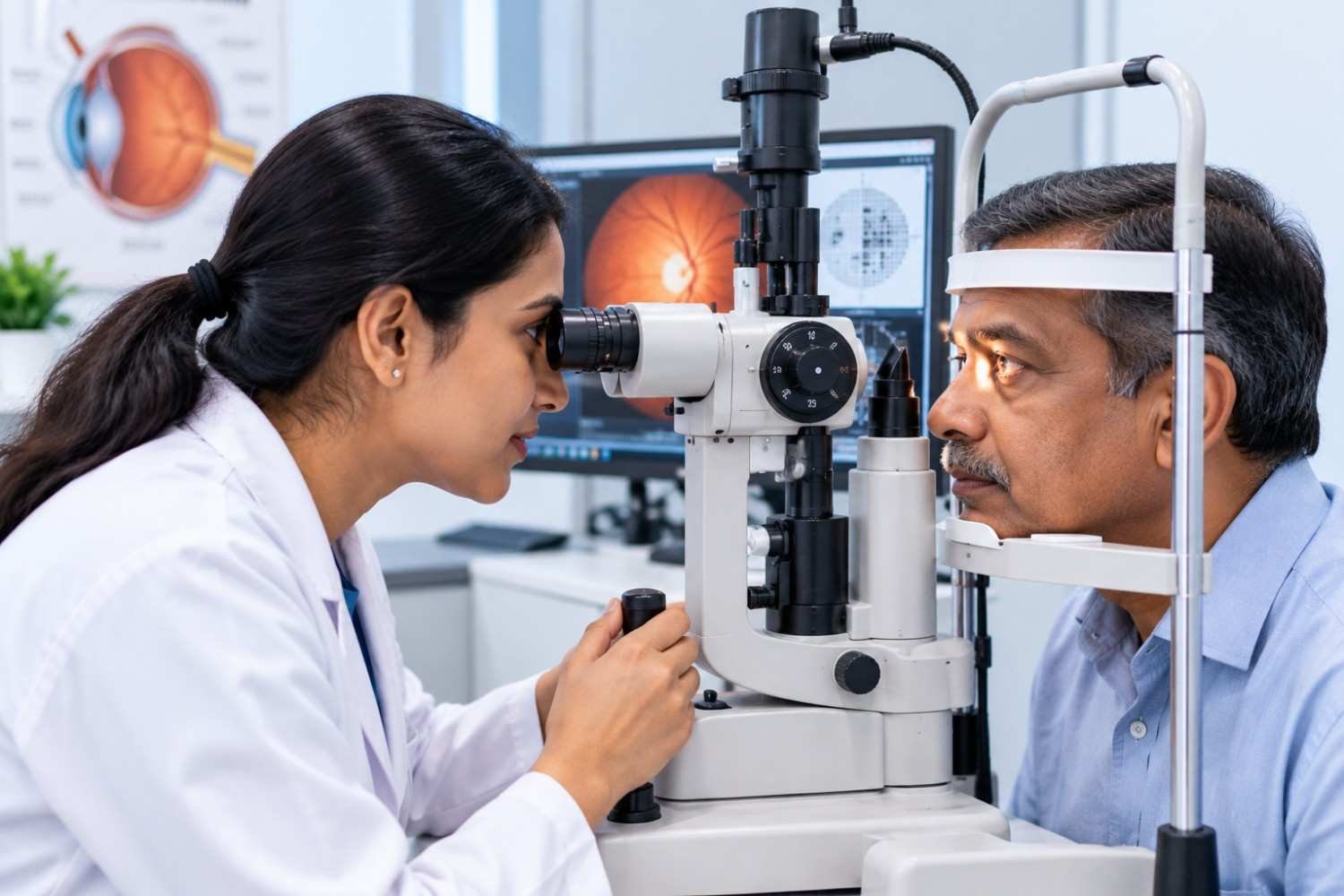
Why Glaucoma Is Different From Most Eye Conditions
Unlike cataracts, glaucoma rarely announces itself in its early stages. Vision loss typically begins at the edges of your sight, while the brain can compensate for these gaps. This means significant and irreversible damage may occur before you notice anything is wrong. Routine eye pressure checks are therefore important, particularly after age 40 or if you have a family history of glaucoma.
Types of Glaucoma
Glaucoma is not a single condition. The type of glaucoma you have plays an important role in determining the appropriate treatment and urgency of care.
| Type | What's Happening | Who's More at Risk |
|---|---|---|
| Primary Open-Angle Glaucoma | The drainage angle looks normal but does not drain fluid efficiently, so pressure rises gradually over months or years. | Higher risk with age Family history and diabetes can also increase risk. |
| Angle-Closure Glaucoma | The drainage angle is physically blocked, causing eye pressure to rise suddenly and severely. | Can be an emergency Sudden painful symptoms require urgent medical attention. |
| Normal-Tension Glaucoma | Optic nerve damage occurs even though eye pressure measures within the normal range. | Requires monitoring The cause is less understood, but treatment and regular monitoring are still important. |
| Congenital / Childhood Glaucoma | The eye's drainage system does not develop properly before birth. | Usually identified in infancy Signs may include cloudy or enlarged eyes, excess tearing or light sensitivity. |
How Glaucoma Is Diagnosed
A full glaucoma work-up looks at several things together, since no single test tells the whole story.
| Test | What It Checks | Why It Matters |
|---|---|---|
| Tonometry | Eye pressure (IOP) | Elevated pressure is the single biggest known risk factor for optic nerve damage. |
| OCT (Optical Coherence Tomography) | Thickness of the optic nerve fibre layer | Can detect nerve fibre loss before it shows up on a visual field test. |
| Visual Field Test (Perimetry) | Peripheral (side) vision | Identifies blind spots caused by nerve damage, often before you'd notice them yourself. |
| Gonioscopy | The drainage angle of the eye | Determines whether you have open-angle or angle-closure glaucoma, which changes the treatment plan. |
Treatment Options, From First-Line to Surgical
Most people with glaucoma never need surgery — treatment typically starts simple and escalates only if needed.
| Option | What It Involves | When It's Used |
|---|---|---|
| Prescription Eye Drops | Daily drops that lower eye pressure by reducing fluid production or improving drainage. | First-line treatment for most open-angle glaucoma. |
| Laser Treatment e.g. SLT, iridotomy | An in-clinic laser procedure to improve drainage or relieve angle blockage. | When drops aren't enough or aren't tolerated, or for angle-closure risk. |
| MIGS Minimally Invasive Glaucoma Surgery | Small, targeted procedures, often combined with cataract surgery. | For moderate glaucoma where a larger surgery isn't yet needed. |
| Traditional Glaucoma Surgery e.g. trabeculectomy, tube shunt | Creates a new drainage pathway for fluid to leave the eye. | For advanced or uncontrolled glaucoma where other options haven't worked. |
Frequently Asked Questions
No — any vision already lost to glaucoma can't be restored, but the condition can almost always be controlled well enough to protect the vision you still have, especially when caught early.
No. Most people are managed successfully with eye drops alone for years, sometimes for life. Laser or surgical options come into play only if drops aren't controlling the pressure adequately.
Family history is one of the stronger risk factors, particularly for open-angle glaucoma. If a parent or sibling has it, it's worth mentioning at your eye exam so screening can start earlier.
Many people with early or well-controlled glaucoma drive without issue. It depends on how much peripheral vision has been affected, which is something your ophthalmologist can assess directly.
As a general guide, once every 1–2 years from age 40 if you have no risk factors, and annually or more often if you have a family history, diabetes, or have already been diagnosed. Your specialist will set the exact interval based on your own results.
Pressure can rise so fast that it damages the optic nerve within hours, sometimes causing permanent vision loss. This is the one form of glaucoma that's a genuine same-day emergency, not something to monitor at home.
Yes — routine screening is typically available at both centres; a trip to the Dibrugarh hospital is usually only needed if laser treatment or surgery is required.
Book Consultation
Quick & Easy Appointment Request