Squint & Paediatrics
Paediatric Ophthalmology is taken quite seriously with expert consultants & surgeons working round-the-clock to make sure, the vision of our future generation is well protected.
Squint (Strabismus) & Paediatric Eye Care
A squint, medically known as strabismus, occurs when the eyes don't align properly — one eye may turn inward, outward, upward, or downward while the other focuses normally. It's one of the most visible eye conditions, affecting not just vision but also a child's confidence and social experience, and in children, timely treatment matters far more than most parents realize.
Our squint and paediatric ophthalmology services are led by Dr. Suvarna Balankhe, trained at Johns Hopkins, USA, offering advanced diagnosis and treatment for children and adults across Dibrugarh, Tinsukia, Sivasagar, Charaideo, Jorhat, Dhemaji, and Arunachal Pradesh.
Types of Squint We Treat
-
Esotropia — one or both eyes turn inward, toward the nose
-
Exotropia — one or both eyes turn outward, away from the nose
-
Hypertropia — one eye is misaligned upward
-
Hypotropia — one eye is misaligned downward
Squint can be constant or intermittent, may affect one or both eyes, and can be present from birth or develop later due to refractive errors, muscle imbalance, injury, or underlying neurological conditions.

Signs Parents Should Watch For
Squint isn't always obvious, especially if it's mild or comes and goes. Consult our specialist if your child shows any of the following:
-
Eyes that visibly point in different directions, even occasionally
-
Squinting or closing one eye in bright sunlight
-
Frequently tilting or turning the head to look at things
-
Sitting very close to the TV or holding books/devices close to the face
-
Bumping into objects or appearing clumsy with depth-related tasks
-
Complaints of double vision or eye strain
-
One eye that seems to "wander" when your child is tired
Why Early Treatment Matters
Squint in children should be evaluated promptly, not watched and waited on indefinitely. Left untreated, especially in early childhood, squint can lead to amblyopia (lazy eye) — a condition where the brain begins to ignore input from the misaligned eye, causing permanent vision loss in that eye if not corrected during the critical window of visual development. The earlier squint and amblyopia are identified and treated, the better the outcome.
Recommended eye examination schedule for children:
-
First comprehensive eye exam: 6 months of age
-
Second exam: around 3 years of age
-
Third exam: before starting school, at age 5–6
-
Annual exams thereafter through school years
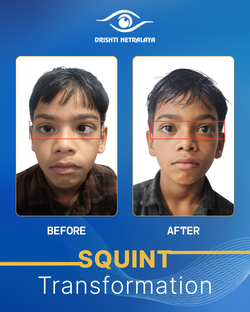
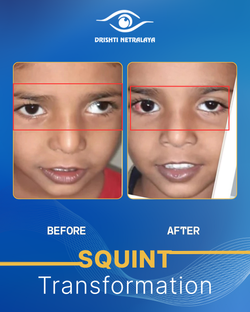
See the Difference: Before & After Squint Correction
![]() | ![]() | ![]() | ![]() | ![]() | ![]() |
|---|---|---|---|---|---|
![]() |